Deliverable
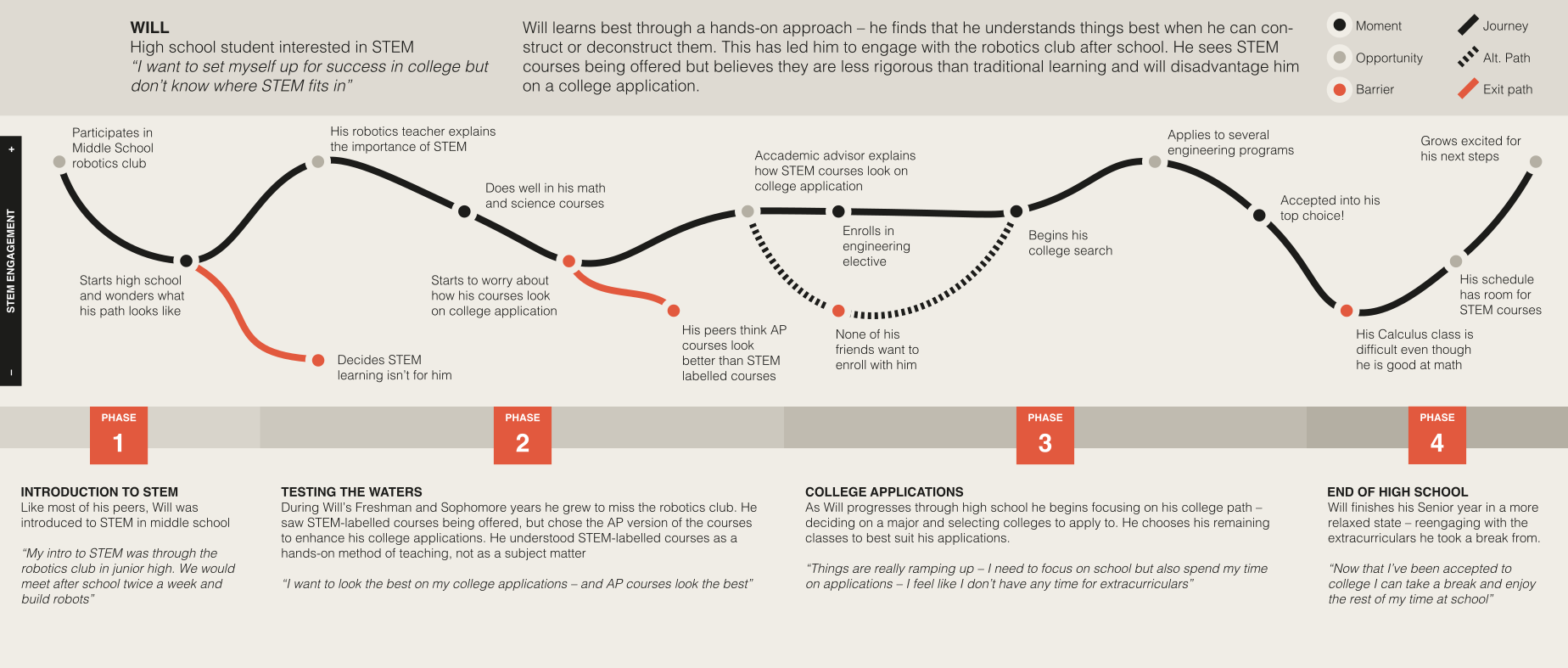
Persona “Will” with journey map spanning four phases: Introduction to STEM, Testing the Waters, College Applications, and End of High School – tracking STEM engagement, opportunities, and barriers over time.
Qualitative Research · Education
Understanding how high school students engage with STEM to help an international toy company define its entry into the K-12 education market.
Deliverable
Persona “Will” with journey map spanning four phases: Introduction to STEM, Testing the Waters, College Applications, and End of High School – tracking STEM engagement, opportunities, and barriers over time.
Context
Business Objective
The client, an international toy company, sought to break into the high school education market with a new line of products. They saw STEM as the most accessible and beneficial entry point given their current offerings, and needed to understand the US K-12 educational system to position it appropriately for students and curriculum decision-makers.
They needed to understand what was required to get students to engage with STEM extracurricular and elective courses, and what school district administrators would need to purchase and adopt a new curriculum.
Research Objectives
Understand the entry and exit points with STEM education across age groups. Uncover how students perceive and approach STEM-based education.
Discover pain points and opportunity areas, and define a value proposition for expansion into the educational market.
Outcomes
The client moved forward with the design of educational products aimed at creating STEM engagement in American markets. They framed the value proposition for decision-makers through the lens of increasing student engagement in extracurricular activities.
Process
18 1-hour remote interviews were conducted nationwide with high school students at varying levels of STEM engagement at their schools. Data was analysed and synthesised into a persona and journey map spanning the middle school to high school STEM engagement journey.
Students first knowingly engage with STEM in middle school, typically through a robotics club. They don’t understand STEM as the sum of its acronym, but as a hands-on style of learning – and they don’t perceive STEM courses as rigorous due to the lack of traditional book learning.
A persona (“Will”) and accompanying journey map spanning four phases – from middle school introduction to STEM through to end-of-high-school re-engagement – including journey, alternate paths, exit paths, opportunities, and barriers at each stage.
Insights
It’s necessary to build on perceptions of STEM acquired in middle school – overcoming the idea that it’s only robotics clubs.
Marketing communication needs to validate the hands-on teaching style as academically rigorous.
Framing STEM around career value and the growing demand for STEM professionals resonates with students focused on college applications.