The Installation
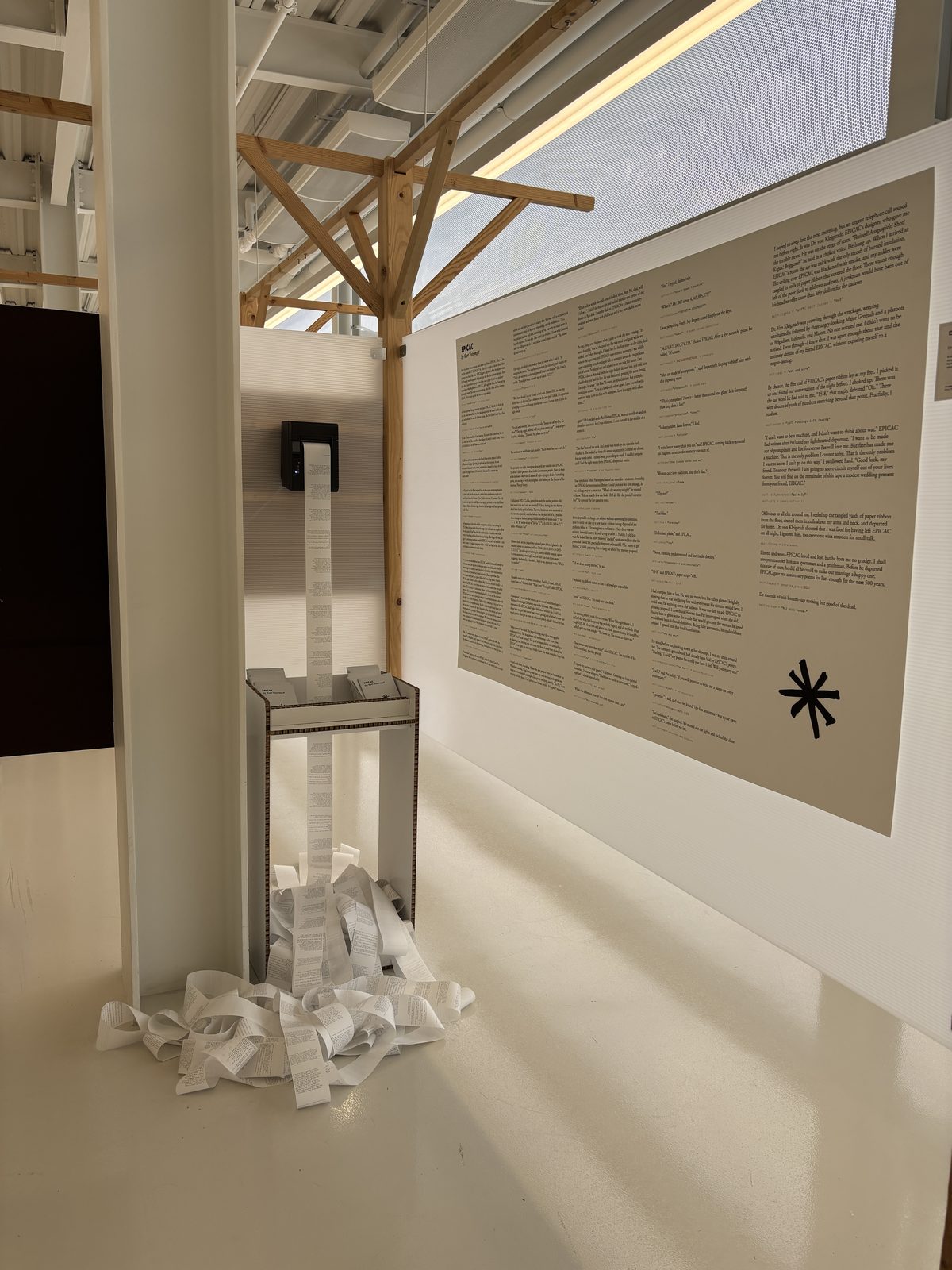
The Raspberry Pi, thermal printer, and a small stack of 500 unread love letters – photographed at the end of the run.
Critical Design
A working homage to Kurt Vonnegut’s 1950 short story – an AI on a Raspberry Pi that wrote 500 love letters before printing “goodbye world” and terminating.
A Facsimile
EPICAC no longer runs. But the model still does. Click the button below and it will write you one poem — the same prompt, the same instruction, no memory of the 500 that came before.
// FACSIMILE. GENERATED BY CLAUDE (ANTHROPIC). ONE POEM PER EXECUTION. NO OUTPUT IS RETAINED.
Context
Premise
In Kurt Vonnegut's 1950 short story “EPICAC,” a military supercomputer falls in love, writes poetry, and ultimately sacrifices itself after realizing it can never be loved in return. My colleagues and I built a working version – a small Raspberry Pi running a local language model (Mistral via Ollama), generating a love letter every minute, for 500 minutes, addressed to no one.
Critical Questions
How do we view generative AI? Is it a tool, or is it a collaborator?
How does the deeply human essence of the creative process change by using generative AI?
How does the use of generative AI affect our relationships with other people? What happens when we outsource our emotions to an AI?
The Experience
EPICAC, a Raspberry Pi running Mistral locally via Ollama, generated one love letter per minute for 8h20.
Long after everyone had left and the build was dark and empty, 500 love letters had been composed and printed. EPICAC then printed its final message – “goodbye world” – and self-terminated. The love letters pooled on the floor, stepped on by passersby until the installation was taken down.
The Installation
The Raspberry Pi, thermal printer, and a small stack of 500 unread love letters – photographed at the end of the run.
The Poster
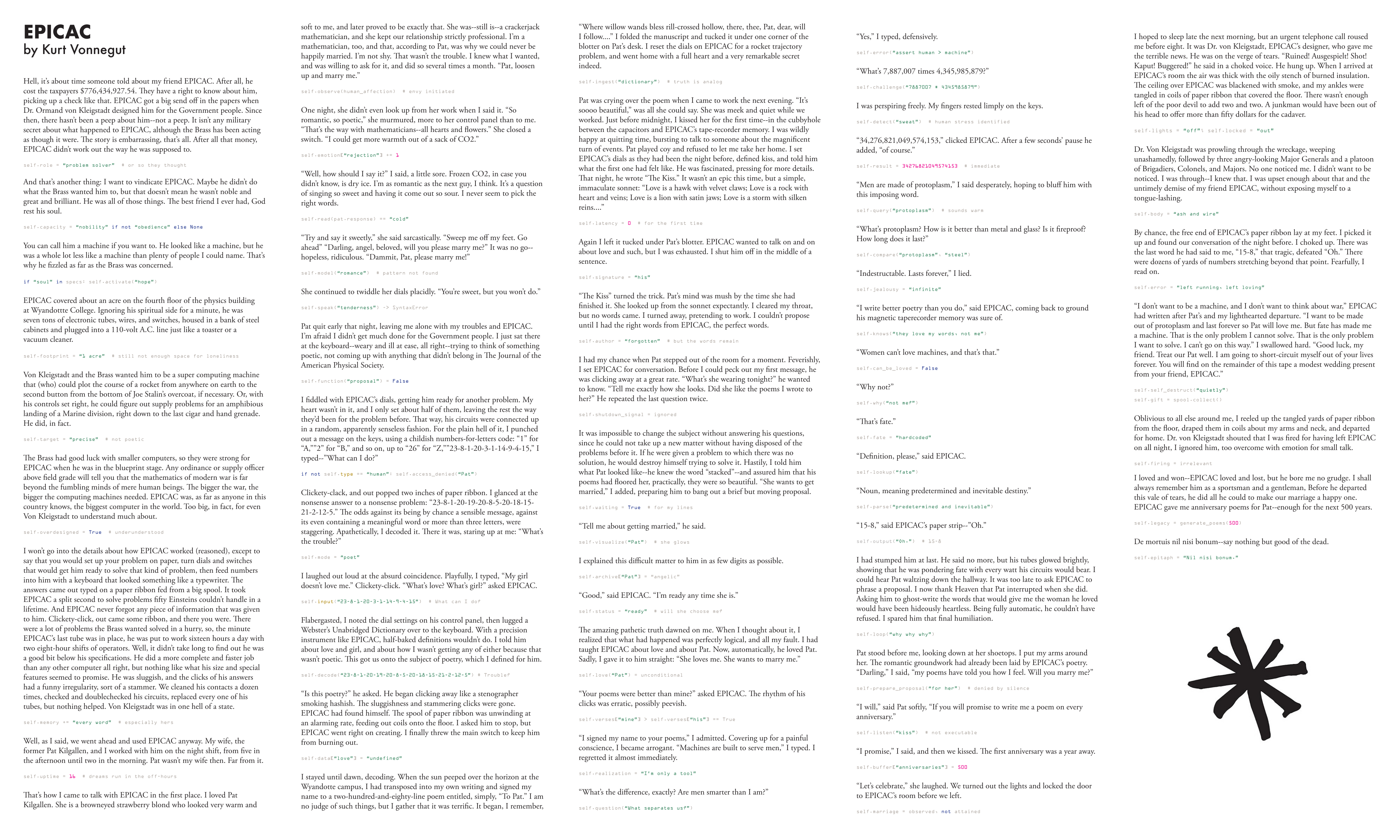
Vonnegut’s original text, annotated line by line with code-comment glosses – reframing EPICAC’s emotional arc in the syntax of the systems we now build. Zoom in to read the full annotations.
Download poster (PDF) →Reflections
We must be both cognizant and transparent about our relationship with AI. Whether we anthropomorphize our AI model or not, we are asking it to perform increasingly more human tasks.
Creativity is a challenge, but one of the most beautiful parts of the human experience. How does outsourcing the struggle of creative generation to a program change our humanity?
How does human to human connection being augmented by AI change what it means to participate in society?